Guinea Pig Nutrition – Basics and Recommendations
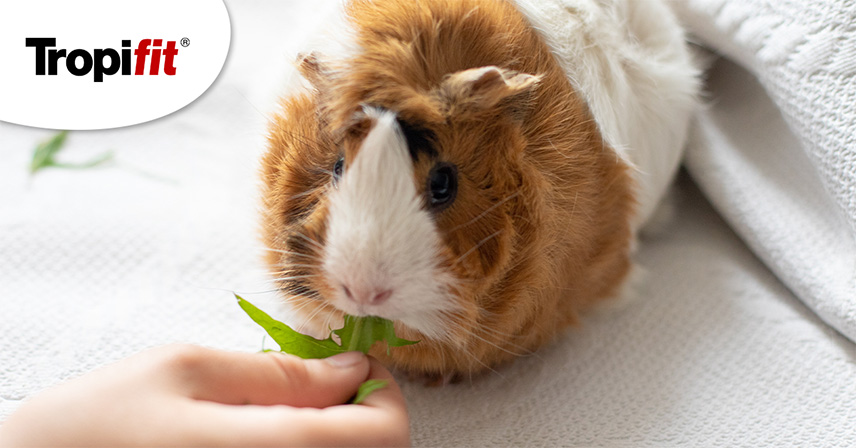
Proper guinea pig nutrition prevents disease and extends its lifespan. A balanced diet helps prevent disease and extends their lifespan, while poor nutrition can quickly lead to dental problems and a host of other health issues. If you want your guinea pig to thrive, it’s essential to know exactly what they should, and shouldn’t, be eating.
In this article
The guinea pig’s digestive system
Guinea pigs are monogastric, hindgut-fermenting herbivores. While that may sound technical, it simply means their digestion relies on a highly developed cecum, a large fermentation chamber in the gut. Here, intestinal microbiota breaks down fibrous plant material. The diversity and function of these microbes depend directly on a diet rich in fiber.
Guinea pigs also practice cecotrophy, a form of double digestion. They produce two types of droppings: hard pellets and soft lumps called cecotrophs. The cecotrophs are eaten directly from the anus, allowing the guinea pig to reabsorb B vitamins, amino acids, and beneficial bacteria that support gut health.
What do guinea pigs eat?
As herbivores, guinea pigs rely on hay as the staple of their diet. To ensure complete nutrition, hay should be supplemented with fresh vegetables, green forage, and high-quality granulated food.
Hay – the foundation of a guinea pig’s diet
You already know that guinea pigs are built to digest high-fiber foods, and hay is exactly that. Hay should be available in the feeder 24 hours a day, and its quality and freshness are crucial.
Crude fiber consists of two fractions:
- Indigestible fiber stimulates intestinal motility (peristalsis), preventing dangerous food stagnation.
- Digestible fiber is broken down by gut microbes into short-chain fatty acids, which serve as the guinea pig’s primary energy source.
Dietary fiber also plays a vital role in tooth wear. Guinea pigs’ teeth, both incisors and molars, grow continuously throughout their lives. Chewing hay and grasses, which contain silica in their cell walls, naturally wears them down. Without constant access to hay, teeth can become overgrown. In extreme cases, dental bridges may form, preventing the guinea pig from eating and ultimately leading to starvation.
Vegetables in a guinea pig’s diet
Offer fresh vegetables daily, about 100–150 g per guinea pig (roughly 0.5–1 cup). Vegetables should be at room temperature, never served straight from the refrigerator. Avoid anything stale or spoiled, as this can lead to enterotoxemia, a serious condition caused by toxins produced by anaerobic bacteria (most commonly Clostridium species) in the digestive tract.

Leafy vegetables such as chicory and romaine lettuce are the safest choices. They provide hydration while encouraging active digestion, which helps prevent bloating.
Introduce new vegetables gradually. Start with a small amount and monitor your guinea pig’s digestive response for at least 24 hours.

Green Forage
“Green forage” refers to the fresh, above-ground parts of plants, grasses, herbs, shrub leaves, and vegetable tops. This type of food most closely resembles the natural diet of wild guinea pigs. It helps maintain hydration and supports smooth passage of food through the digestive tract. Never feed wet or “soggy” forage that has been stored for a long time in a plastic bag or cut with a lawn mower, as it can ferment quickly and become harmful.
Recommended green forage for guinea pigs
- Grasses and grains (fresh): young oats, wheat, corn
- Leaves from shrubs and trees: raspberry, strawberry, currant; young leaves and twigs from birch, willow, hazel, and apple trees
- Herbs and dried plants: serve both preventive and therapeutic roles. They provide essential micronutrients and support metabolic and digestive processes. Think of herbs as a dietary supplement, making up about 5–10% of the daily portion, offered fresh or dried.
Basic herbs for daily use
- Ribwort plantain: anti-inflammatory, supports mucous membrane regeneration and immune function
- Dandelion: stimulates digestion, acts as a diuretic, supports urinary tract health
- Nettle: rich in iron and vitamin C; best fed dried to eliminate stinging properties
- Raspberry and strawberry leaves: astringent, support digestion, rich in vitamins
Herbs with targeted therapeutic effects
- Peppermint and lemon balm: antispasmodic, calming, appetite-stimulating during digestive upset or recovery
- Chamomile: antiseptic, soothes inflammation in the digestive tract and oral cavity
- Parsley and dill: very high in vitamin C, but also high in calcium—limit to 2–3 times per week to avoid bladder stones
- Oregano: antibacterial, anti-inflammatory, supports natural detoxification
Dried forages such as oat, wheat, and alfalfa chaff can also be beneficial. Keep in mind that alfalfa is high in calcium and protein and is more calorie-dense. Chaff also helps wear down teeth effectively.
Guidelines for safe herb feeding
Introduce each new herb gradually and monitor stool consistency to avoid diarrhea. Always pay attention to the quality of the raw material. Avoid collecting herbs near roadsides, and do not freeze them, freezing damages plant structure and drastically reduces vitamin C content. For comprehensive support, consider using ready-made, grain-free herb blends designed for guinea pigs.
Be mindful of herb composition. Herbs like basil, alfalfa, and sage are rich in calcium. Unlike many mammals, guinea pigs absorb calcium passively, almost in proportion to dietary intake, rather than based on their body’s needs. Excess calcium is excreted by the kidneys. When adult guinea pigs consume too much calcium, such as from large amounts of alfalfa hay, clover, or certain herbs, it can lead to the crystallization of calcium oxalates and the formation of bladder stones.
Granuleted Food
Choose only grain-free “all-in-one” granulated foods with uniform size, shape, and texture, such as Tropifit All in 1 Cavia or Tropifit Naturals Rolls Cavia. These prevent selective feeding and ensure balanced intake of macronutrients, micronutrients, and vitamins. Avoid cheap mixes with colorful additives (like crisps or cookies), grains, and nuts. These can lead to obesity and fatty liver disease.
Vitamin C
Like humans, guinea pigs cannot synthesize vitamin C on their own, so it must be provided through their diet. A healthy adult guinea pig needs approximately 10–30 mg of vitamin C per 1 kg of body weight per day. Pregnant or sick animals may require up to 50 mg/kg.
Water for guinea pigs
A guinea pig drinks an average of 50–100 ml of water per kilogram of body weight per day. Intake also depends on how much fresh vegetables they eat, water-rich foods like cucumbers or chicory can naturally reduce thirst.
Fresh, clean water must always be available in a water bottle or heavy ceramic bowl, and it should be changed daily. It’s also wise to check water quality (pH, nitrites, nitrates, chlorine, minerals), as this plays a key role in preventing health issues like bladder stones.
If your guinea pig starts drinking significantly more than usual, it could be an early sign of diabetes or kidney failure, requiring immediate veterinary consultation.
What kind of water should you give to your guinea pig?
- Tap water: If very hard (high in minerals), filter it (e.g., with a pitcher or dedicated filter) to lower calcium levels. If in doubt about safety, boil it.
- Spring water: Typically contains no more than 450 mg/l of dissolved minerals, a good alternative if tap water is hard or tastes bad.
- Mineral water: Not recommended due to high mineral salt content (500–1,500+ mg/l). High calcium or magnesium levels drastically increase the risk of urinary tract stones.
Methods of providing water
- Drip/nipple drinkers: Most hygienic water stays free of bedding and feces.
- Ceramic bowls: Must be heavy to prevent tipping. Require regular cleaning to remove food residue and feces.
Common mistakes when providing water
- Adding vitamins directly to water: Not recommended. You can’t control how much the guinea pig consumes, and vitamin C oxidizes quickly (losing potency in about 30 minutes). It also alters the water’s taste, which may discourage drinking and lead to dehydration.
- Poor waterer hygiene: Algae and bacteria often grow inside tubes. Clean weekly with special brushes or by scalding with boiling water.
What should be avoided in a guinea pig’s diet?
- Baked goods: bread, rolls, cookies ferment in the stomach, causing bloating
- Animal products: meat, deli meats, eggs, milk, cheese, yogurt – guinea pigs are strict herbivores
- Sweets and salty snacks: chocolate, potato chips, crackers, salted nuts
- Potatoes and potato peels: contain solanine (a toxic alkaloid) and hard-to-digest starch
- Onions, garlic, leeks, chives: sulfur compounds irritate the digestive tract; in rare cases, can cause hemolytic anemia
- Rhubarb: high in oxalic acid, which binds calcium to form insoluble oxalates and can irritate the intestines
- Avocado: contains persin, a toxin that can cause breathing difficulties, heart problems, and even death in guinea pigs
- Legumes (beans, peas, soybeans): too high in protein and energy for a hay-based diet; disrupt digestion and cause bloating
- Iceberg and butterhead lettuce: negligible nutritional value; often high in pesticides and nitrates, which can cause diarrhea
- Fruits with pits: apple, apricot, and cherry pits contain amygdalin, which releases hydrogen cyanide in the body
- Ornamental plants: tulips, daffodils, hyacinths, lily of the valley, lilies, ivy, dracaena, ficus, peace lily, poinsettia, yew – all poisonous
- Grass clippings: ferment rapidly and may contain toxic compounds from exhaust fumes and motor oil
- Honey-coated corn, hard candies, biscuits: high in sugar, molasses, and fat damage gut microbiome, promote weight gain and gastric issues
- Salt licks and calcium blocks: increase risk of urinary tract stones; essential minerals should come from herbs and vegetables
- Products containing grains and seeds
How to properly feed a guinea pig – Summary
- Hay is essential: fresh, aromatic, and always available
- Introduce new foods gradually: small amounts, watching for reactions
- Monitor portions: prevent overweight and related health issues
- Offer forage and vegetables daily: for variety and balanced nutrition
- Treat fruit as a treat: rarely and in small amounts
- Wash all produce thoroughly before serving
- Remove uneaten food to prevent spoilage
- Avoid unhealthy grain-based treats: choose options with vegetables and herbs
- Ensure constant access to fresh, clean water: just as important as food
Guinea pig nutrition is a matter of prudence and common sense. That said, the most reliable sources of knowledge are experienced breeders, whose practical insights are invaluable, and leading pet food manufacturers who base their products on scientific principles and the latest research in dietary balance.
Katarzyna Nowaczewska
Veterinary technician and caretaker at the Moomin Valley Guinea Pig Breeding Farm. She runs a responsible breeding program with passion, ensuring the health, proper socialization, and optimal living conditions for her animals. She focuses on careful selection of breeding lines and supports new owners with her knowledge and experience. At the Moomin Valley Guinea Pig Breeding Farm, the well-being of guinea pigs always comes first.