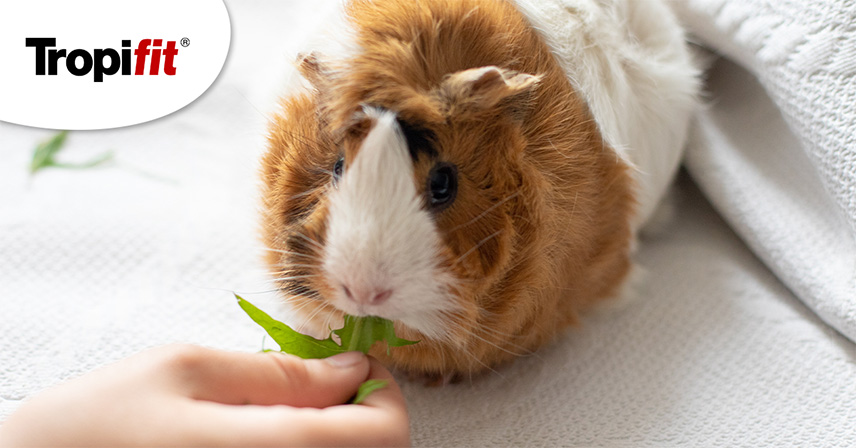
Proper guinea pig nutrition prevents disease and extends its lifespan. A balanced diet helps prevent disease and extends their lifespan, while poor nutrition can quickly lead to dental problems and a host of other health issues. If you want your guinea pig to thrive, it’s essential to know exactly what they should, and shouldn’t, be eating.
Guinea pigs are monogastric, hindgut-fermenting herbivores. While that may sound technical, it simply means their digestion relies on a highly developed cecum, a large fermentation chamber in the gut. Here, intestinal microbiota breaks down fibrous plant material. The diversity and function of these microbes depend directly on a diet rich in fiber.
Guinea pigs also practice cecotrophy, a form of double digestion. They produce two types of droppings: hard pellets and soft lumps called cecotrophs. The cecotrophs are eaten directly from the anus, allowing the guinea pig to reabsorb B vitamins, amino acids, and beneficial bacteria that support gut health.
As herbivores, guinea pigs rely on hay as the staple of their diet. To ensure complete nutrition, hay should be supplemented with fresh vegetables, green forage, and high-quality granulated food.
You already know that guinea pigs are built to digest high-fiber foods, and hay is exactly that. Hay should be available in the feeder 24 hours a day, and its quality and freshness are crucial.
Crude fiber consists of two fractions:
Dietary fiber also plays a vital role in tooth wear. Guinea pigs’ teeth, both incisors and molars, grow continuously throughout their lives. Chewing hay and grasses, which contain silica in their cell walls, naturally wears them down. Without constant access to hay, teeth can become overgrown. In extreme cases, dental bridges may form, preventing the guinea pig from eating and ultimately leading to starvation.
Offer fresh vegetables daily, about 100–150 g per guinea pig (roughly 0.5–1 cup). Vegetables should be at room temperature, never served straight from the refrigerator. Avoid anything stale or spoiled, as this can lead to enterotoxemia, a serious condition caused by toxins produced by anaerobic bacteria (most commonly Clostridium species) in the digestive tract.

Leafy vegetables such as chicory and romaine lettuce are the safest choices. They provide hydration while encouraging active digestion, which helps prevent bloating.
Introduce new vegetables gradually. Start with a small amount and monitor your guinea pig’s digestive response for at least 24 hours.

“Green forage” refers to the fresh, above-ground parts of plants, grasses, herbs, shrub leaves, and vegetable tops. This type of food most closely resembles the natural diet of wild guinea pigs. It helps maintain hydration and supports smooth passage of food through the digestive tract. Never feed wet or “soggy” forage that has been stored for a long time in a plastic bag or cut with a lawn mower, as it can ferment quickly and become harmful.
Recommended green forage for guinea pigs
Basic herbs for daily use
Herbs with targeted therapeutic effects
Dried forages such as oat, wheat, and alfalfa chaff can also be beneficial. Keep in mind that alfalfa is high in calcium and protein and is more calorie-dense. Chaff also helps wear down teeth effectively.
Introduce each new herb gradually and monitor stool consistency to avoid diarrhea. Always pay attention to the quality of the raw material. Avoid collecting herbs near roadsides, and do not freeze them, freezing damages plant structure and drastically reduces vitamin C content. For comprehensive support, consider using ready-made, grain-free herb blends designed for guinea pigs.
Be mindful of herb composition. Herbs like basil, alfalfa, and sage are rich in calcium. Unlike many mammals, guinea pigs absorb calcium passively, almost in proportion to dietary intake, rather than based on their body’s needs. Excess calcium is excreted by the kidneys. When adult guinea pigs consume too much calcium, such as from large amounts of alfalfa hay, clover, or certain herbs, it can lead to the crystallization of calcium oxalates and the formation of bladder stones.
Choose only grain-free “all-in-one” granulated foods with uniform size, shape, and texture, such as Tropifit All in 1 Cavia or Tropifit Naturals Rolls Cavia. These prevent selective feeding and ensure balanced intake of macronutrients, micronutrients, and vitamins. Avoid cheap mixes with colorful additives (like crisps or cookies), grains, and nuts. These can lead to obesity and fatty liver disease.
Like humans, guinea pigs cannot synthesize vitamin C on their own, so it must be provided through their diet. A healthy adult guinea pig needs approximately 10–30 mg of vitamin C per 1 kg of body weight per day. Pregnant or sick animals may require up to 50 mg/kg.
A guinea pig drinks an average of 50–100 ml of water per kilogram of body weight per day. Intake also depends on how much fresh vegetables they eat, water-rich foods like cucumbers or chicory can naturally reduce thirst.
Fresh, clean water must always be available in a water bottle or heavy ceramic bowl, and it should be changed daily. It’s also wise to check water quality (pH, nitrites, nitrates, chlorine, minerals), as this plays a key role in preventing health issues like bladder stones.
If your guinea pig starts drinking significantly more than usual, it could be an early sign of diabetes or kidney failure, requiring immediate veterinary consultation.
Guinea pig nutrition is a matter of prudence and common sense. That said, the most reliable sources of knowledge are experienced breeders, whose practical insights are invaluable, and leading pet food manufacturers who base their products on scientific principles and the latest research in dietary balance.
Katarzyna Nowaczewska
Veterinary technician and caretaker at the Moomin Valley Guinea Pig Breeding Farm. She runs a responsible breeding program with passion, ensuring the health, proper socialization, and optimal living conditions for her animals. She focuses on careful selection of breeding lines and supports new owners with her knowledge and experience. At the Moomin Valley Guinea Pig Breeding Farm, the well-being of guinea pigs always comes first.

Is your guinea pig having trouble breathing? Or breathing very rapidly, even while at rest? These are emergency signs that require an immediate visit to the veterinarian. Learn what symptoms point to heart disease in guinea pigs and how to care for a sick pet.
Guinea pigs are masters at masking illness. Instinctively, they hide weakness and pain to avoid appearing vulnerable to predators. As a result, many diseases—including heart conditions—often don’t show obvious symptoms until they’re already in an advanced stage.
The following cardiac conditions are sometimes diagnosed in guinea pigs:
Watch for the following changes:
If you suspect a heart problem, it’s essential to visit a veterinarian—ideally one who specializes in exotic animals. The vet will typically perform:
Treatment focuses on stabilizing the patient and managing symptoms. Veterinarians may prescribe medications that help the heart work more efficiently and reduce the signs of heart failure. Owner support is equally critical. Key aspects of home care include:
Labored or rapid breathing in a guinea pig is always a medical emergency. The sooner you seek professional help, the better the prognosis. Appropriate cardiac medications and attentive care can often significantly extend and improve your pet’s quality of life.
Agnieszka Górecka, DVM
TropiFit and TropiDog brand specialist; graduate of the Faculty of Veterinary Medicine in Wrocław; certified dog and cat massage therapist. She has completed numerous courses in canine and feline nutrition led by experts from Poland, the UK, and the USA. She is the author of many articles on animal health and nutrition.

Your guinea pig’s droppings are one of the most important clues to how well its digestive system is working and how healthy it is overall. So what color, shape, and consistency should healthy guinea pig droppings have? Read on to discover what your guinea pig’s droppings reveal about its diet and when it’s time to call the vet.
A healthy guinea pig produces plenty of hard, uniform droppings. Here’s what normal guinea pig droppings look like:
Guinea pigs should have multiple bowel movements throughout the day. If you notice fewer droppings than usual, it can be an early warning sign of a gastrointestinal obstruction.

When you clean the cage, keep an eye out for any changes in the shape, consistency, or amount of feces. Any change like this deserves closer attention and a chat with your vet, especially if it lasts more than 12–24 hours. Watch out for:
Besides regular droppings, guinea pigs also produce soft, light-brown, shiny clusters called cecotrophs, which they eat straight away. Why? Cecotrophs are packed with vitamins B and K, and eating them helps your guinea pig replenish essential nutrients. If you spot cecotrophs in the cage, it could mean your guinea pig has too many of them or isn’t feeling well – for example, sore joints might make it hard to reach and eat them.
Remember: a diet made up of about 80% fresh hay is the gold standard for picture-perfect guinea pig droppings!
Agnieszka Górecka, DVM
TropiFit and TropiDog brand specialist; graduate of the Faculty of Veterinary Medicine in Wrocław; certified dog and cat massage therapist. She has completed numerous courses in canine and feline nutrition led by experts from Poland, the UK, and the USA. She is the author of many articles on animal health and nutrition.
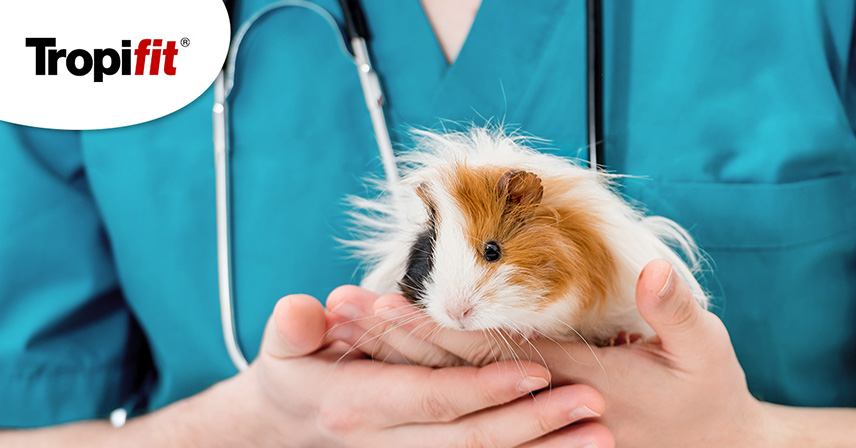
Diseases affecting guinea pigs are often not well understood by their owners. However, fungal infections are relatively common, making it important to understand their basics. In this article, you’ll learn how to recognize a fungal infection in a guinea pig, as well as how it is diagnosed and treated.
Ringworm is a highly contagious fungal disease. Infectious spores can be present on objects, bedding, or directly on an animal’s fur. Many guinea pigs act as asymptomatic carriers, meaning they show no visible signs but can still spread the infection to other guinea pigs and even to humans.
Fungal infections are often associated with poor environmental and health conditions, including overcrowded housing, stress, and concurrent illness. Warm temperatures and high humidity further promote fungal growth.
Ringworm typically presents as areas of hair loss with broken hairs and circular bald patches. Lesions most often begin on the nose and may spread to the muzzle and ear pinnae. In more advanced cases, lesions can extend to the lower back.
If left untreated, secondary bacterial infections may develop, leading to papules, pustules, crusting (scabs). Affected guinea pigs may also experience itching and inflammation.
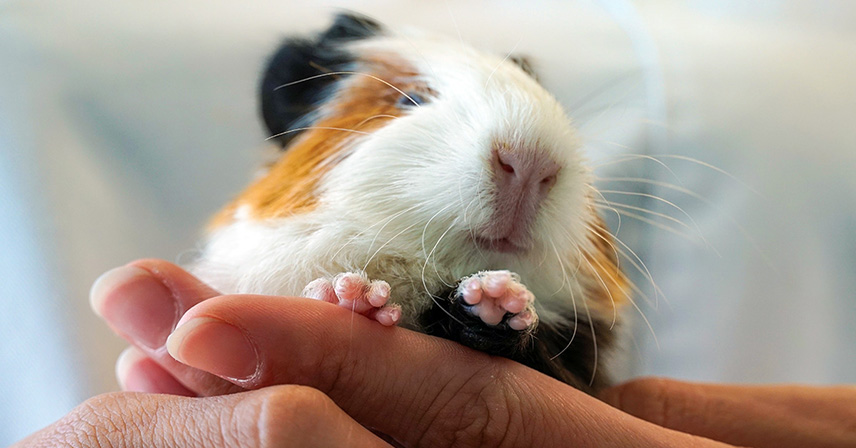
At the veterinary visit, a clinical examination is first performed to assess overall health. Then additional diagnostic tests are performed.
Diagnostic methods include skin scraping examined microscopically to rule out ectoparasites and wood’s lamp examination (UV light) whichmay detect fluorescence in some fungal infections. Further options are trichogram (hair examination and fungal culture.
Early treatment leads to faster resolution and reduces the risk of transmission. Treatment should always be carried out under veterinary supervision.
Treatment can be topical or systemic. Systemic treatment most commonly involves itraconazole, which is administered orally to the animal for 3–4 weeks. However, there are also several other options available, and the decision is made by the treating veterinarian. Topical treatment involves the use of creams and baths with shampoos containing antifungal ingredients.
Successful treatment requires not only treating the animal but also disinfecting contaminated areas. It is important to vacuum and clean these surfaces using appropriate agents, such as chlorine bleach diluted with water. It is also necessary to change the bedding every day.
Fungal infection in guinea pigs is a condition that is fairly easy to treat, but the treatment itself must last several weeks. Remember that medication should continue even after the skin lesions have cleared up.
Agnieszka Górecka, DVM
TropiFit and TropiDog brand specialist; graduate of the Faculty of Veterinary Medicine in Wrocław; certified dog and cat massage therapist. She has completed numerous courses in canine and feline nutrition led by experts from Poland, the UK, and the USA. She is the author of many articles on animal health and nutrition.